Patagonia or Antarctica? How to Choose the Right Southern Argentina Adventure
Expert guidance from 01 Argentina Travel Agency — over 20 years helping travelers discover the best of the south
There is a particular kind of traveler who arrives at this question. They have already seen a good portion of the world. They are not interested in crowded beaches or predictable city breaks. They want something that genuinely moves them — a landscape so vast and so indifferent to human presence that it recalibrates their sense of scale. They want the south. The deep, wild, extraordinary south of Argentina.
And then they face the choice: Patagonia or Antarctica?
It is one of the most common questions the team at 01 Argentina Travel Agency encounters, and after more than 20 years of guiding thousands of international travelers through both destinations, we can say with confidence that it is also one of the most rewarding questions to help someone answer. Because the truth is, these are not interchangeable experiences. They are not even particularly similar ones. What they share is a level of grandeur that very few places on earth can match — and beyond that, they are worlds apart.
This guide will walk you through both destinations honestly and in detail, compare them across every dimension that matters to a traveler, and help you figure out which one belongs on your itinerary — or whether, if the stars align, you might just be able to do both.
Understanding the Two Destinations
Before diving into comparisons, it is worth establishing clearly what each destination actually involves, because both terms are used loosely and can mean different things to different people.
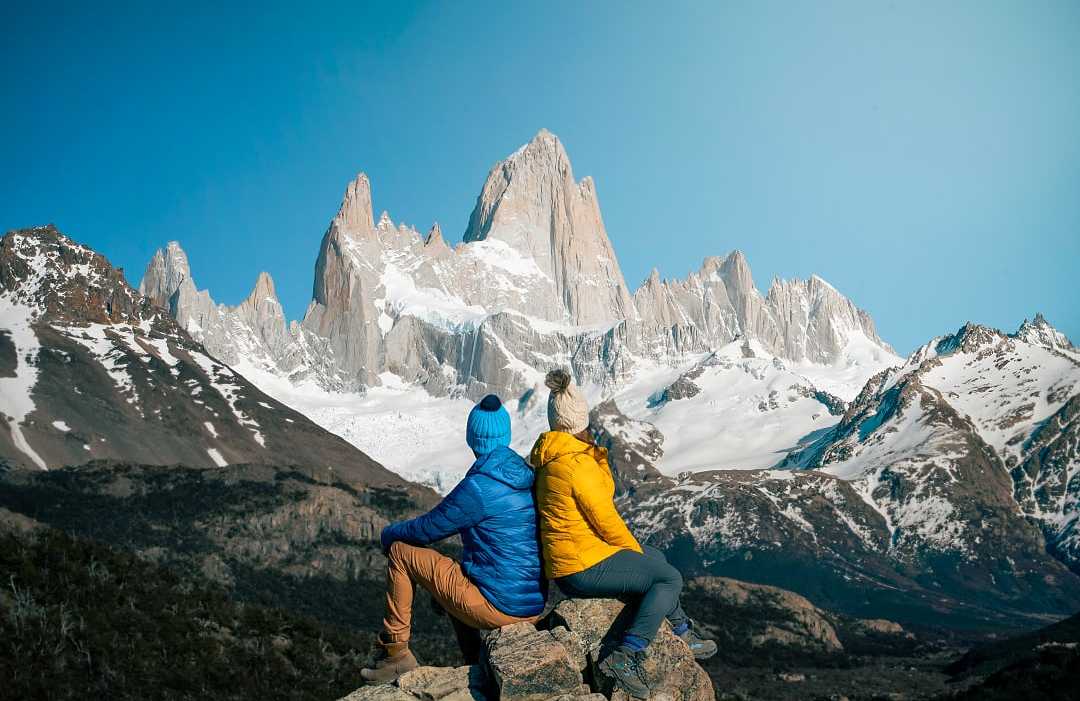
Patagonia, in the context of Argentine travel, refers broadly to the vast southern region of the country that stretches from roughly the Río Colorado in the north down to the tip of the continent at Tierra del Fuego. It encompasses an extraordinary range of landscapes — the towering granite spires of the Fitz Roy massif in El Chaltén, the celebrated glaciers of Los Glaciares National Park including the thundering Perito Moreno, the windswept steppes of the Patagonian plateau, the marine wildlife of the Valdés Peninsula, and the dramatic channels and forests of Tierra del Fuego. Patagonia is a land destination, accessible year-round in most sections, and ranging from demanding multi-day trekking to leisurely scenic drives and wildlife watching.
Antarctica, by contrast, is an ocean voyage. It is reached almost exclusively by cruise ship departing from Ushuaia or Buenos Aires, crossing the infamous Drake Passage, and spending several days navigating the Antarctic Peninsula and surrounding islands before returning. It is not a place you walk through at your own pace — it is a place you witness from the deck of a ship and, on expedition cruises, from Zodiac inflatable craft and occasional shore landings. It is a destination defined by ice, silence, wildlife, and the profound awareness that you are standing at the edge of the inhabitable world.
Both are genuinely life-changing. They are also genuinely different in almost every practical respect.
Comparing the Two: What Actually Matters
The Landscapes
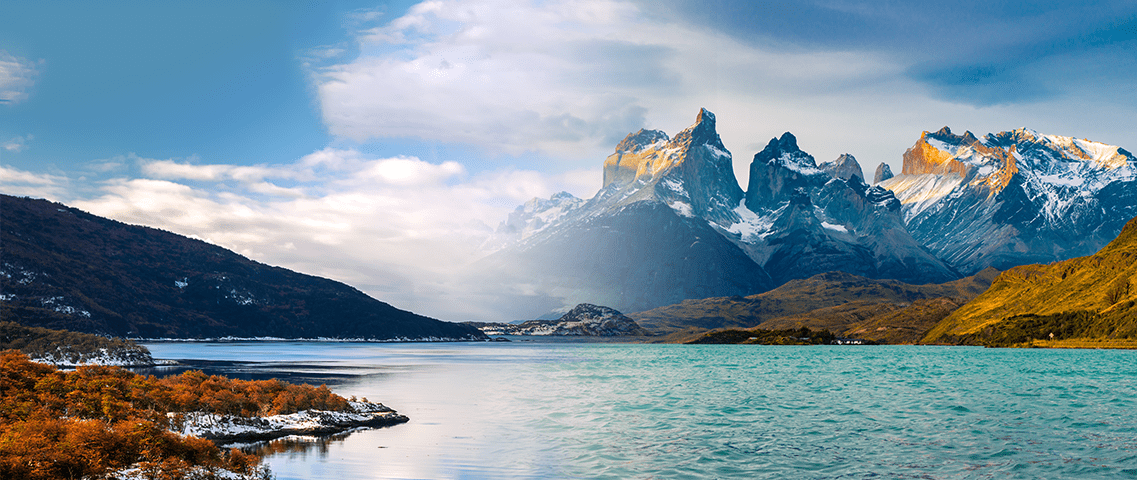
Patagonia’s landscapes are diverse and dynamic in a way that rewards extended exploration. The granite towers of Torres del Paine — just across the Chilean border, and a natural extension of any Argentine Patagonia itinerary — are among the most photographed mountains on earth, and justifiably so. The Perito Moreno Glacier, one of the few advancing glaciers in the world, is a wall of ancient blue ice three kilometers wide and sixty meters tall that periodically collapses into Lake Argentino with a crack like artillery fire. El Chaltén, the self-declared trekking capital of Argentina, sits beneath peaks that seem to have been drawn by someone who had never seen a real mountain and simply imagined the most dramatic shape possible.
Antarctica operates on a different scale entirely. The landscape there is not diverse — it is absolute. Ice dominates everything: sea ice, shelf ice, glaciers the size of small countries, and icebergs that drift past the ship in colors of white and blue that have no precise equivalent in any other environment. It is a landscape of reduction — the world stripped back to its most elemental components — and its effect on the people who witness it is consistently described in the same terms: overwhelming, humbling, and strangely peaceful.
If you are drawn to dramatic variety and the sense of moving through a landscape that changes character from valley to valley, Patagonia is your destination. If you are drawn to the sublime power of a single, absolute environment experienced in its totality, Antarctica is calling.
The Wildlife
Both destinations offer extraordinary wildlife encounters, but the nature of those encounters differs significantly.
Patagonia’s wildlife is spread across an enormous territory and requires some effort and patience to find. The Valdés Peninsula, a UNESCO World Heritage Site in northern Patagonia, is one of the world’s premier marine wildlife watching destinations — southern right whales breed in its sheltered bays between June and December, and its beaches host vast colonies of southern elephant seals, Magellanic penguins, and sea lions. Andean condors soar over the steppe with a wingspan that can exceed three meters. Guanacos — the wild camelids of the Pampas and Patagonia — graze along roadsides with aristocratic indifference. Pumas, though rarely seen, roam the Torres del Paine area in growing numbers.
Antarctica concentrates its wildlife encounters in a way that is almost overwhelming. Penguin colonies numbering in the tens of thousands occupy the rocky shores of the peninsula and surrounding islands. Multiple species — Gentoo, Chinstrap, Adélie, and Macaroni penguins — go about their daily business entirely unbothered by the presence of small groups of humans standing quietly among them. Humpback whales surface alongside the ship. Leopard seals drape themselves over ice floes with predatory ease. Wandering albatrosses — the largest flying birds on earth — follow the vessel for days. Wildlife in Antarctica is not something you seek out. It is simply everywhere, all the time, in numbers that make the experience feel almost surreal.
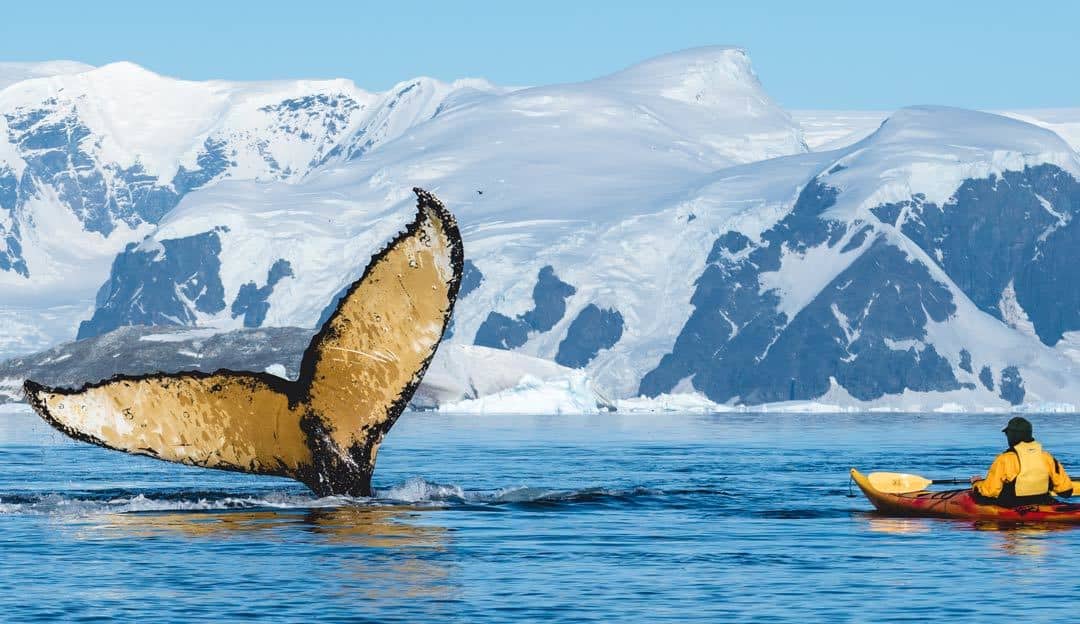
For sheer wildlife density and the intimacy of unmediated encounters, Antarctica holds an edge. For variety across species and habitats, Patagonia is exceptional.
Physical Requirements
This is one of the most important practical distinctions between the two destinations, and one that the team at 01 Argentina Travel Agency always addresses early in any conversation.
Patagonia can be as physically demanding or as relaxed as you choose to make it. At one end of the spectrum, the W Trek in Torres del Paine and the multi-day circuits around Fitz Roy are serious hiking expeditions requiring good fitness, proper gear, and a tolerance for unpredictable weather. At the other end, the Perito Moreno Glacier can be experienced from well-maintained boardwalks with no significant physical effort, and the wildlife of Valdés Peninsula is accessible on comfortable day excursions from Puerto Madryn. Patagonia accommodates a wide range of ages and fitness levels, provided the itinerary is designed accordingly.
Antarctica, by contrast, is primarily a shipboard experience. The physical demands of the cruise itself are modest — you are a passenger on a vessel, not an expedition member. Where some physical capability becomes relevant is during Zodiac excursions and optional shore landings, which involve boarding and disembarking from small inflatable craft in open water conditions, and occasionally walking on uneven rocky or icy terrain. These activities are manageable for most reasonably healthy adults, but they are not suitable for travelers with significant mobility limitations. The Drake Passage crossing also involves two days of open ocean sailing that can be rough, and some travelers find this challenging regardless of their overall fitness.
At 01 Argentina Travel Agency, with over 20 years of experience placing travelers on both Patagonian treks and Antarctic cruises, we take the time to understand each client’s physical profile and expectations before making any recommendation. Getting this match right is one of the most important things we do.
Cost and Budget
There is a meaningful difference in the investment required for each destination, and it is worth being direct about it.
Patagonia offers a genuine range of budget options. At the lower end, the trekking circuits of El Chaltén can be done on a relatively modest budget using the town’s free camping infrastructure and well-marked national park trails. Mid-range travelers will find comfortable lodges and estancias throughout the region, while the upper end of the Patagonian market — private transfers, high-end eco-lodges, and fully guided fly-fishing or horseback expeditions — can be as expensive as any luxury travel destination in the world.
The key point is that Patagonia is accessible across a wide financial spectrum.
Antarctica is, by its nature, a premium travel experience. Cruise fares vary depending on the ship, the itinerary, and the cabin category, but the combination of a dedicated polar vessel, IAATO-compliant operations, professional expedition staff, and the sheer logistical complexity of reaching one of the most remote places on earth means that an Antarctic cruise represents a significant financial commitment. That investment, in the experience of our clients at 01 Argentina Travel Agency, is consistently judged to have been entirely worthwhile — but it is a commitment that requires planning and budget allocation well in advance.
Season and Timing
Patagonia is broadly a spring and summer destination — October through March offers the most reliable weather, the longest days, and the fullest range of activities. That said, certain Patagonian experiences have their own seasonal logic: whale watching at Valdés peaks between September and November, the spring wildflowers of the steppe are at their best in October, and the dramatic autumn colors of the beech forests in March and April are genuinely spectacular and draw far smaller crowds than the peak summer months.
Antarctica operates within a strict seasonal window: November through January only. Outside of this period, sea ice renders the peninsula largely inaccessible to cruise ships, and the extreme polar winter makes the region inhospitable in ways that go far beyond uncomfortable. Within that window, November and December tend to offer the most dramatic snowy scenery and active penguin breeding behavior, while January brings slightly warmer temperatures and more accessible waterways.
The overlap between the two seasons is significant, which means that a combined Patagonia and Antarctica itinerary — something 01 Argentina Travel Agency has designed many times for clients with sufficient time — is entirely feasible within a single southern hemisphere summer trip.
The “If You Are…” Guide
Sometimes the clearest way to make a decision is to recognize yourself in a description. Here is how we at 01 Argentina Travel Agency typically frame it:
- If you are a passionate hiker or trekker who measures a great trip by the trails covered and the summits reached, Patagonia is your answer. It is one of the world’s great trekking destinations and will reward you at every turn.
- If you have already done significant hiking in Patagonia or other major destinations and are looking for something categorically different — an experience that no amount of walking can replicate — Antarctica is the natural next step.
- If budget is a genuine constraint, Patagonia offers compelling experiences at a range of price points. Antarctica requires a larger investment and should be planned when the budget allows it to be done properly.
- If you are traveling with children, Patagonia is the more practical and versatile choice, with wildlife, landscapes, and activities suited to a broad range of ages. Antarctica can be done with older teenagers, but the shipboard nature of the experience and the Drake Passage crossing are factors worth considering carefully.
- If time is limited to two weeks or fewer, choose one and do it well. Attempting to rush through both in a single short trip risks doing justice to neither. With three weeks or more, a combined itinerary becomes genuinely viable, and 01 Argentina Travel Agency has the experience to design it seamlessly.
- If seeing penguins is your singular obsession, Antarctica wins without contest. Nothing in the world prepares you for standing among thousands of them.
Can You Do Both?
Yes — and for travelers with the time and the budget, combining Patagonia and Antarctica within a single extended journey is one of the most extraordinary trips it is possible to take anywhere in the world.
A well-designed combined itinerary might look something like this: arrive in Buenos Aires and spend two or three days exploring the city properly. Fly south to El Calafate and spend four days in the Los Glaciares National Park area, visiting Perito Moreno and trekking around El Chaltén. Continue to Ushuaia for a day or two before boarding your Antarctic cruise — a voyage of 14 to 17 nights that returns to Buenos Aires. Add optional stops at the Valdés Peninsula or Mendoza’s wine country on the way back north, and you have a journey of approximately four weeks that covers the full spectrum of what southern Argentina has to offer.
This kind of multi-destination itinerary is exactly what 01 Argentina Travel Agency has been designing and operating for over 20 years. We know how to pace it, how to sequence it, which connections to make and which to avoid, where to stay, and how to ensure that a long and complex trip feels effortless rather than exhausting.
FAQ
Q: Is Patagonia or Antarctica better for first-time visitors to Argentina?
For a first visit, most travelers benefit from starting with Patagonia. It is more logistically accessible, covers a broader range of experiences, and pairs naturally with Buenos Aires and other Argentine highlights. Antarctica tends to resonate most deeply with travelers who have already experienced the country and are ready for something more singular and remote.
Q: How far in advance should I plan an Antarctica cruise?
At least 12 months in advance for the best cabin selection and pricing. The most popular itineraries and stateroom categories sell out well ahead of the season. 01 Argentina Travel Agency can advise on current availability and any last-minute opportunities that may arise.
Q: What is the ideal amount of time to spend in Patagonia?
A minimum of seven days allows a meaningful experience of either the southern sector around El Calafate and El Chaltén or the northern sector around Bariloche. Ten to fourteen days allows a genuinely comprehensive journey through the region’s highlights. Combined with Buenos Aires and other destinations, most of our clients dedicate between 10 and 21 days to a full Argentine Patagonia itinerary.
Q: Can 01 Argentina Travel Agency handle the entire trip — flights, hotels, tours, and cruise?
Absolutely. This is precisely what we do, and what we have been doing for over two decades. From your international arrival in Buenos Aires to your final departure, every element of your itinerary — domestic flights, transfers, accommodation, guided excursions, national park access, cruise bookings, and border crossing logistics — is handled by our team. You travel. We take care of everything else.
Whether Patagonia, Antarctica, or the remarkable combination of both is calling you, the team at 01 Argentina Travel Agency is ready to build the journey. Over 20 years of experience, thousands of satisfied travelers, and an unmatched knowledge of southern Argentina — all at your service. Reach out today and let’s start planning.